
150 Cheapside
Location: City of London
Sector: Office / Commercial
Year: 2026
Size: 5,500 sqft
Client: SMMC
150 Cheapside sits on one of London’s oldest trading streets, a place that has carried people and goods for centuries. St Paul’s Cathedral rises just beyond its rooftops, and the daily flow of workers, visitors and locals gives the street a constant sense of movement.
When White Red were invited to reimagine the building, the starting point wasn’t a grand gesture. It was a simple question: how do you make a familiar building feel more present, more welcoming, and more connected to the life around it?
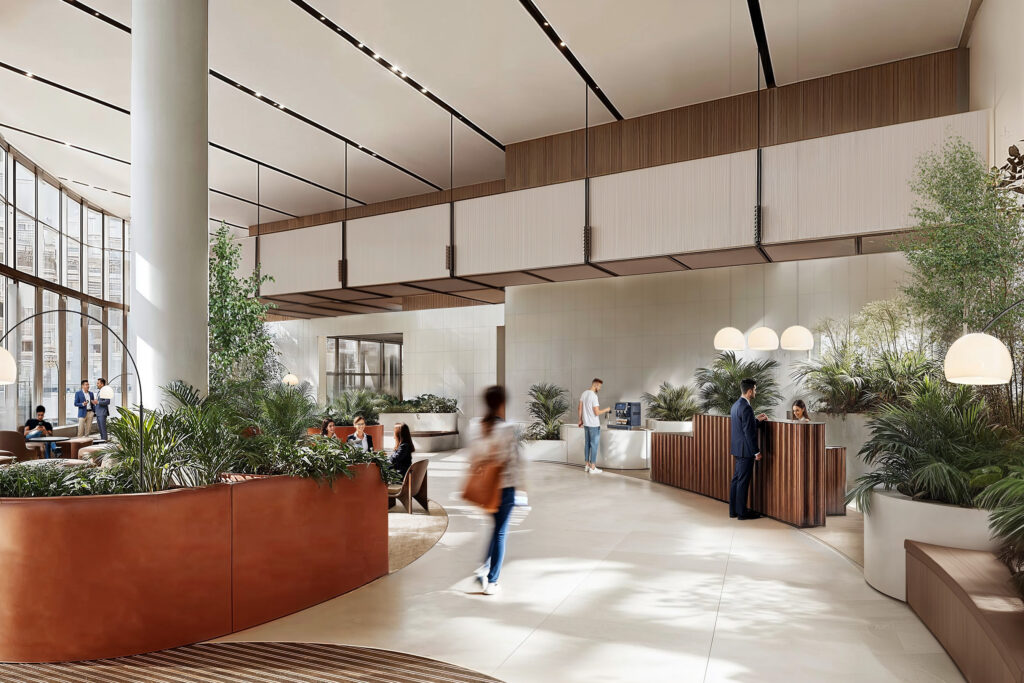
The entrance became the first moment to explore. Cheapside is a long, straight street, and buildings often feel as though they’re lined up shoulder-to-shoulder. The team looked at how 150 Cheapside met the pavement and saw an opportunity to create a calmer pause in that rhythm. By setting the entrance back slightly and choosing materials that feel warm and understated, the building gains a sense of depth. The new solar shading adds a gentle pattern to the façade, giving it a more deliberate presence without competing with the history that surrounds it.
Inside, the story continues with a focus on how people move. The reception, lift lobbies and WC facilities were approached as a single experience rather than separate rooms.
The same thinking informed the proposed CAT A office floors. Rather than introducing unnecessary complexity, the design followed a clear form-follows-function philosophy. A perforated metal mesh ceiling is arranged across a disciplined linear grid, with lighting alternating alongside integrated service troughs to create a calm and legible workspace. The result is a clean, elegant ceiling solution that brings lighting, services and architecture together into a single coordinated system, while offering a subtle nod to the building’s high-tech architectural character.
The materials are simple and consistent, creating a feeling of ease as you step off the street and into the building. The approach was deliberate: making the everyday journey feel clearer and more comfortable through thoughtful refinement rather than dramatic intervention.
The eighth floor is where the building opens up. A lightweight pavilion sits gently on the roof, creating a room that feels sheltered yet connected to the city. Its glazing opens up long views across the rooftops and towards St Paul’s, turning the skyline into part of the experience.
The terrace around it was reshaped with planting and places to sit, giving people somewhere to pause above the movement of Cheapside. It’s a space that feels like a reward: a quiet moment at the top of the building where the city feels close, but softened.
Throughout the project, White Red worked with the building’s existing character rather than against it. Every decision was shaped by what the building already offered: its proportions, its architectural character, its materials, and its place on one of London’s oldest streets.
The result is a building that feels renewed without losing its familiarity.
It has a clearer identity, a more thoughtful journey, and a rooftop that brings the city into view.
150 Cheapside is ready for its next chapter, still part of the fabric of the city, but now with a stronger sense of who it is.
2 Moorgate
Sector: Office / Commercial
Year: 2026
Size: 22,000 sqft
Client: WRE/Santa Lucia Seguros
2 Moorgate is a beautiful historic building with two distinct personalities.
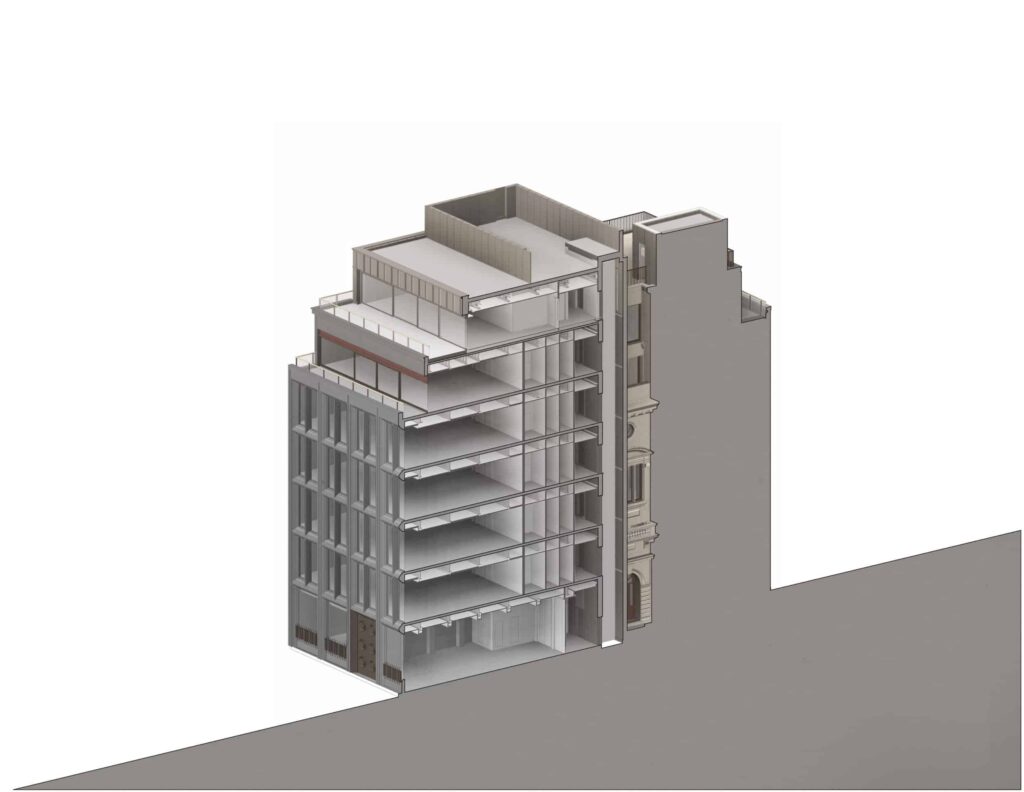
On Moorgate, it presents a dark modernist façade from the 1970s, built in deep stone with strong metal lines that stand apart from the pale classical buildings around the Bank of England. Turn the corner into Founders Court and the character changes completely. The side elevation dates from the 1800s, appearing lighter and more ornate. Early interior photographs reveal the same contrast, with modern ceiling grids sitting above antique furniture. This blend of eras became the foundation of the project.
The brief was to create a contemporary workplace that felt aspirational while still honouring the building’s history. As a Grade II listed building, the staircase and façades are protected, so every decision required care. Working with façade specialists FMDC and heritage consultants Portico, we explored how to upgrade the building’s performance while keeping its original character intact.
The roof was the most sensitive part of the project. The original top level includes a simple step back that defines the building’s modernist profile. Building straight up from the main façade would have made the extension feel heavy, so the new rooftop rooms sit behind that step, allowing the original architecture to remain the focus. Because the building sits within protected views, the shape and height of the rooftop rooms and plant enclosure were carefully adjusted so they felt natural in the surrounding townscape. They are finished in dark toned panels that sit comfortably with the stone below.
Inside, we focused on making the entrance clearer and more welcoming. By reorienting and simplifying the reception desk, we opened a direct view to the lift cores, where the original marble still survives. This small change makes those first moments inside the building feel more connected to its history.
The roof terrace became a pivotal part of the project. The building’s narrow floor plates, tight access and fire requirements meant exploring every possible option, starting with the smallest intervention. Once the terrace was confirmed, we focused on making it genuinely useful. It evolved into a glazed room for hosting, opening onto terraces with views across the City, including the layered rooftops, the Bank of England and the mix of historic and modern buildings that define this part of London. The new volume was shaped carefully so it felt like a natural continuation of the building rather than something placed on top.
Throughout the design process, we thought of the building as a sequence of moments. Arriving off the street or by bike. Crossing reception and seeing the marble lifts. Moving through workspace floors that balance modern clarity with subtle references to the building’s older layers. Reaching the roof and finding a space that feels both new and rooted in the building’s character.
The final scheme preserves the building’s identity while giving it a new purpose. It remains what it has always been: a building that feels confident and modern, with its history still present, ready for its next chapter.
48 Charles Street

Sector: Office / Commercial
Year: 2026
Size: 11,000 sqft
Client: Berkeley Estate Asset Management
Transforming an historic Mayfair address into a contemporary, luxurious workplace that honours its legacy.
Located within the Mayfair Conservation Area, Grade II listed 48 Charles Street has, over the course of its lifetime, been the Hungarian Embassy, Winston Churchill’s childhood home, and a publisher’s office. Originally constructed in the 1750s, successive alterations and extensions had left the building fragmented, with disparate architectural languages and unsympathetic twentieth-century additions.
Our approach restores clarity and cohesion to create a high quality workspace. Invasive modern interventions are removed, revealing the building’s original character. The historic fabric will be carefully conserved and enhanced, while the interior will be reconfigured to create a series of calm, generous workspaces defined by a rich and consistent material palette.
By engaging with the public square and drawing inspiration from local materials, we are transforming its identity. The interiors will shift toward a more hospitality-focused experience, with an emphasis on wellness, creating spaces that foster comfort, health, and interaction.
Bow Bells House
Sector: Office / Commercial
Year: 2026
Size: 216,000 sqft
Client: Fubon Life / Fabrix
How can you create an identity that tells the story
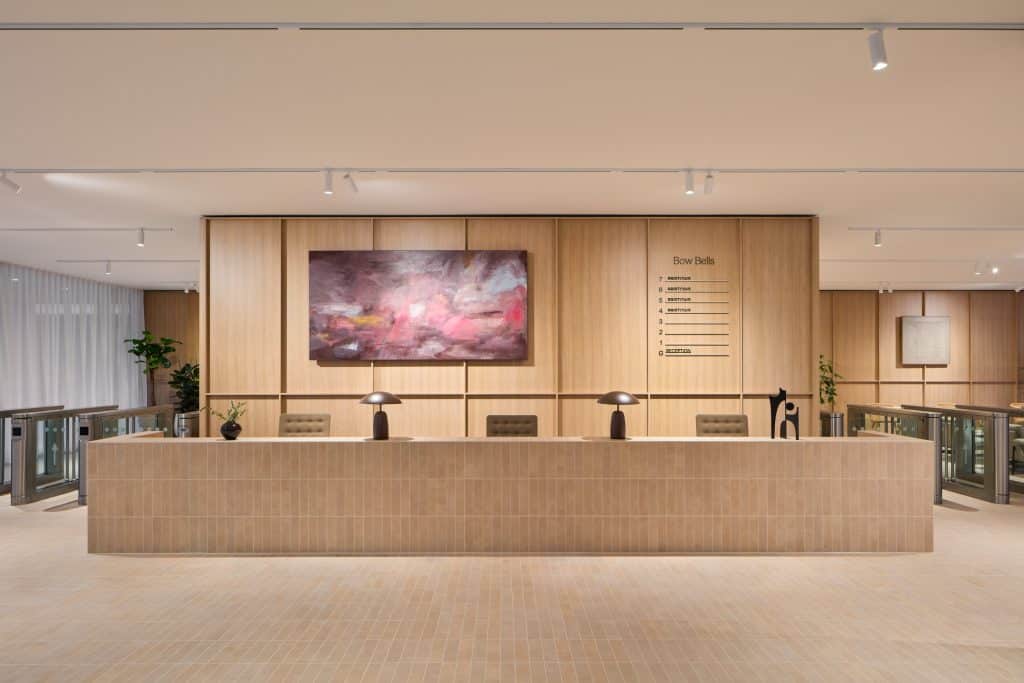
Bow Bells House is a high-quality building that, over time, has become disconnected from evolving values and tastes, leaving it perceived as bland, anonymous, and dated.
Situated in the heart of the historic City of London, surrounded by the narrow cobbled streets of Bow Lane and Bow Churchyard, the design aims to reconnect the building to its rich urban context.
By engaging with the public square and drawing inspiration from local materials, we are transforming its identity. The interiors will shift toward a more hospitality-focused experience, with an emphasis on wellness, creating spaces that foster comfort, health, and interaction.
These changes will elevate Bow Bells House, making it a desirable and integral part of its community once again.
Designed to Last: The Story Behind Virgin’s Reused Furniture
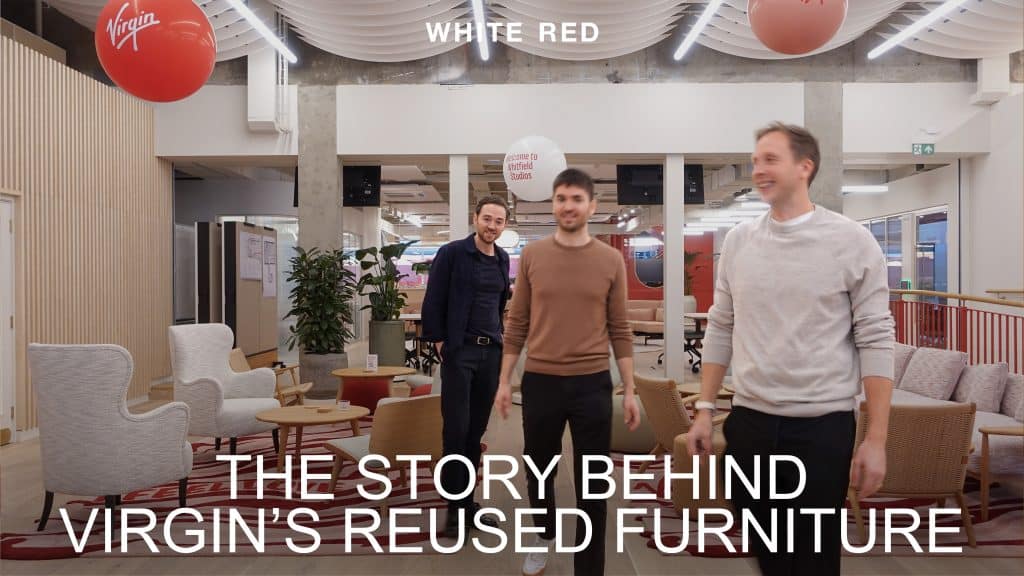
Collaborating to make the most written by Dicky Initially, I thought refurbishing furniture would limit our design creativity. However, seeing how revitalised pieces can enhance a vision changed my perspective entirely. Constraints became creative opportunities, fundamentally reshaping how we approach design today. The collaborative process behind furniture selection exemplified how integral curation and teamwork are […]
Virgin HQ

Location: Fitzrovia, London
Sector: Office / Commercial
Year: 2024
Size: 24,000 sqft
Client: Virgin Group
Hello London! Hello, new HQ! A design that speaks to wellbeing, inclusivity, and flexibility
Whitfield Studios, steeped in music history, has been transformed into Virgin Group’s vibrant new London headquarters by White Red Architects. This four-storey space blends Virgin’s innovative culture with the legacy of legendary artists like the Rolling Stones, Madonna, and Amy Winehouse.
The design preserves the character of the studio’s clay tile ceilings and brickwork, adding curving motifs inspired by vinyl records to honour its musical roots. Each floor is tailored to specific work styles, with social spaces for collaboration, serene areas for focus, and accessible features like height-adjustable desks and contrasting finishes.
Sustainability was at the core of the renovation, achieving an EPC A rating with sustainable energy, natural materials, and thoughtful reuse of furniture. The inclusion of outdoor spaces, skylights, and air-purifying plants creates a harmonious connection to nature.
Drawing inspiration from the site’s history, materials and colours were chosen that reflect the original design intent. Fluted timber panels were used throughout to create a cohesive design language. The new roof terrace offers a contemporary outdoor space that complements the building’s historical context.
Whitfield Studios is now a dynamic workplace that celebrates Virgin’s identity while honouring its storied past, fostering creativity, inclusivity, and wellbeing for its 400 team members.
Amnesty International

Location: Shoreditch, London
Sector: Office / Commercial
Year: 2024
Size: 68,000 sqft
Client: Amnesty International UK
Respecting the Past, Designing the Future
The feasibility study for Amnesty International’s headquarters, located in the heart of Shoreditch, explored redevelopment opportunities within a vibrant cultural and historical context. The existing site, a former furniture factory, is situated in the South Shoreditch Conservation Area and has been earmarked for potential refurbishment and extension.
Three concepts were developed: an office-centric option and two hotel configurations. The office proposal envisioned a ground-plus-six-storey structure with rooftop amenities, blending heritage preservation with modern, adaptable workspaces. Key design elements included open layouts, rooftop terraces, and a focus on daylight and connectivity.
Our approach was sensitive to the site’s historic and urban context, preserving positive heritage aspects while introducing sustainable materials and enhanced massing. The project prioritised inclusivity and future adaptability, supporting Amnesty’s mission to create a dynamic and welcoming headquarters.
Film House

Sector: Office / Commercial
Year: 2025
Size: 95,800 sqft
Client: Hines
How can you create a sanctuary for calm, among Soho’s vibrant energy.
Film House is a landmark building in the heart of London’s Soho. Working closely with various stakeholders will yield commercial space of the highest quality, in keeping with the building’s vibrant setting.
Having undergone prior reconfiguration and extension, our design merges the historical charm of the surrounding neighbourhood with the integration of a new ‘London Street’ connecting the Wardour Street entrance with the end-of-trip facilities accessed via Sheraton Street.
The design focus became about the use of natural materials, neutral colours and incorporation of biophilic design principles to create a sense of wellness.This is particularly evident in the new reception and shared amenity, crafted for the enjoyment of building users on the rooftop.
Drawing the street into the building and moving away from generic and expansive floorplates, Film House regains its social character.
Sketching the Story, Not Just the Space

Using Mental Canvas to Capture Atmosphere Through Moments in Time written by Joe We didn’t have time for a CGI. It was a tight pitch, and we needed to communicate the full experience of a hospitality space – not just the layout, but the mood, the atmosphere, and how it might feel to actually be […]
“The Garage” Rathbone Street

Location: Fitzrovia, London
Sector: Office / Commercial
Year: 2023
Size: 25,700 sqft
Client: Stevens Properties Ltd
7-9 Rathbone Street was an anonymous old warehouse in Fitzrovia dating back to the 1920s. The entire building was in need of refurbishment providing opportunities to create new roof terraces and improve the building’s image.
During the design process, an old photograph emerged which showed the original building as a garage. The words ‘J.A. Stephens’ over the door revealed a personal connection between the client and his great-grandfather. From this moment on, the project became about reestablishing this lost identity.
Historical features were reinstated, including the original ‘MAGNETOS’ sign and the ornate archway above the doorway. Historical photographs and adverts were used in the stairwell and office floors to remind people of the building’s past.
Fabric ducts made from recycled plastic provided an innovative and sustainable solution for the building’s services. This choice reduced embodied carbon while maintaining a high-quality, machine washable finish.
To connect the largest floorplate to the roof terrace above, a pop-up was built with hanging plants to draw the eye and invite people to explore.
“The Garage” is now back in Fitzrovia.